Benefits of using plastic gift boxes

Are you the one who always end up with a last-minute gift shopping? On the edge of your holiday or any special event shopping you always tangle up in the store aisles just to find that perfect gift and a lot of times all it requires is the right product packaging to push you to the last step to take the final decision.

Benefits of using plastic gift boxes -2


There is not limit of consumables to choose from and from all the fancy electronics to family valuables, the added flavoured deserts and that perfect cufflink, it is pretty imperative to make your product standout from the competition. It has often been observed that your product can either make or break a sale and utilizing attractive packaging like using clear plastic packaging gives your product more visibility, makes it attractive and engaging. If your product is rigid you can always opt for clear polystyrene plastic boxes that are an excellent way to store and display you product.

Technology and Packaging:

Whenever we talk about techno deals, a good investment is always involved. For techno lovers, even a scratch is a huge matter of concern and they cannot offer one of it on their product. Now, while the product is in shipping or at display under a bright light and what so ever the condition is, there is a very good chance of the product to get damage. Sometimes it is the shipping bruises or it is the dust and moisture that can damage the circuit boards. The cardboard packaging won’t be able to protect the way a clear plastic cover can do. With an addition of foam inserts for extra protection  in a tangible value-added packaging solutions.

 Those Shiny Products:

The most common factor with the shiny products like jewellery is, more the time they are kept in packages more the tarnish it will adapt. As per jewelrymakingjournal, Sulphur and Airborne chemicals are the main reason behind tarnishing. It said that, “ … jewelery tarnishes much faster if it’s left out in the open than if it’s stored away in an acid-free, closed container.” Use of boxes that can be printed on, which gives a door to introduce your own brand making it an ideal packaging that the customer would love too.

Using boxes that can be printed on so you can include your brand logo or personalization will create a chic packaging your customers will love.

Jewelry + time = tarnish. According to jewelrymakingjournal.com, Sulphur and airborne chemicals are actually the main cause of tarnish—but you get the picture. And, they add, “ … jewelry tarnishes much faster if it’s left out in the open than if it’s stored away in an acid-free, closed container.” People don’t buy shiny chains and precious gems only to watch them discolor and lose that beautiful shine. When it comes to displaying, packaging, and storing, jewelry requires special attention and handling. Displaying your jewels in polystyrene boxes that are naturally clear and can withstand environmental variations helps maintain the integrity of their beauty. Using boxes that can be printed on so you can include your brand logo or personalization will create a chic packaging your customers will love.

Packaging Solutions for Your Business

With Isell Packaging you can get solutions with all the above solutions. With our general-purpose polystyrene rigid plastic boxes, no matter what you deal to ship, it can be boxed under a magnificent plastic packaging that is not only safe but long lasting too. Our products re:

  • FDA compliant—non-toxic
  • Good dimensional stability
  • Low cost compared to other materials
  • Easy to paint, glue, and print on
  • Excellent aesthetic qualities

Let us know how you plan to bring change in your product packaging in the comments section below.

 

Choosing the Food Packaging On the Basis of their Characteristics

How do you define a right food packaging?

A right food packaging is more than an attractive wrap up.

It should be functional as well.

For example, a right food packaging protects the content from weather or normal wear and tear. It should be easier to handle. And the important thing is that a right packaging makes your product stand out in the sea of the similar products.

A right food packaging

Being a responsible business owner, you want your food packaging right for environment and waste management practices as well.

Also Read: Needs of plastic in custom food packaging

So you must have understood that a food packaging should have all these points.

However, it is not easier to balance all these factors in a packaging material. This is because each packaging material varies by certain properties which are determined by…

  • Material
  • Design
  • The Type of Food to Be Packaged
  • Respond
  • Shelf-Life
  • Environmental Conditions
  • Ease of Use
  • Disposal
  • Cost Related to Production and Distribution.

Simply put, every food packaging material has its own characteristics. These factors may be interrelated as some packaging types interact with certain type of foods.

Therefore, it requires a deep analysis for each product to come up with an optimal packaging.

A through research over the packaging characteristics must cover the points like…

  • Life expectancy
  • Interactions with the content inside
  • Distributions
  • Safety of the product it stores
  • Resistance to Gases, Heat and Moisture
  • Portability
  • Consumer Friendly

Here we will go through the characteristics of major food packaging products.

Glass:

Advantages:

  • Moisture and heat resistant
  • Non-reactive
  • Transparent (lets consumers see products)
  • Reusable/Recyclable

Disadvantages:

  • Brittle and Breakable
  • Not Easy to Carry
  • Heavy and Bulky to Transport

Aluminum:

Advantages:

  • Resistant to Moisture, Heat, Gases and Corrosion
  • Lightweight
  • Recyclable

Disadvantages:

  • Not being able to welded
  • Less strength
  • Limited shapes
  • Expensive

Tinplate:

Advantages:

  • Water and heat resistant
  • Durable
  • Recyclable and easy to separate from waste (as it is magnetic)
  • Cheaper alternative to aluminum

Disadvantages:

  • Reacting with foods
  • Requiring a can opener
  • Heavier than aluminum

Tin-free Steel:

Advantages:

  • Strong and Durable
  • Resistant to heat
  • Recyclable
  • Cheaper than tinplate

Disadvantages:

  • Not being able to weld
  • Prone to corrosion
  • Requiring a can opener
  • Heavier than aluminum

Paper and Paperboard:

Advantages:

  • Lightweight
  • Good strength
  • Low cost
  • Made from renewable resources
  • Recyclable

Disadvantages:

  • Prone to moisture and humidity
  • Poor barrier to light
  • Tears or damages easily

Polyesters:

Advantages:

  • Strong
  • Ideal for hot filling
  • Excellent barrier characteristics
  • High clarity
  • Shatter and tear resistant
  • Easy to recycle in rigid form

  Disadvantages:

  • May pose environmental threat in debris

Also Read : 7 Types of Plastics and Which One You Should Use

Bottom Line:

The key objective of a food packaging must be maintaining the quality, safety and taste/nutritional value of food.

Apart from that, it is also essential to determine the environmental impact of a package. Therefore, analysis should cover the concerns related to environmental costs, energy consumption and waste generation related to a packaging. The impact of packaging waste can be lowered by following EPA guidelines, assessing requirements in terms of environmental impact and selecting the packaging materials wisely.

Therefore, joint efforts by consumers, industry and government are essential for creating optimal food packaging solutions that not only prove eco-friendly, but also maintain the quality and safety of the food.

Amazing DIY Halloween Decoration Ideas with Old Waste Items

With Halloween round the corner, you must be ready to create “scary” crafts. From crafty pumpkins, flying bats, backyard cemetery to hanging ghosts, there are so many things you can give your home a complete Halloween makeover.

Ghost from Soft Drink Plastic Bottles

Instead of spending money on expensive crafts, make them at home using used items around you. This way, you not only save money, but also recycle the waste which otherwise will go to the landfills or ocean.

If you think that you don’t possess good craft skills to make your own decoration, don’t be disappointed. Here are projects for the people with any skill level. All you need to collect the old stuff like bottles and packaging.

Ghost from Soft Drink Plastic Bottles:

This is one of the easiest Halloween arts from the used things. All you need a transparent plastic bottle (without any color) and muslin cloth and a piece of iron wire.

Remove the label from the bottle. Noose a piece of wire around the neck so that you can create the arms of a ghost. Now cover it up with a muslin cloth. And draw the eyes of the ghost over the cloth with a black marker.

Your ghost is ready to scare. Place it in a dark lit spot. The effect would be superb if you could create couple of ghosts in similar manner.

Cardboard Tombstones:

Another great Halloween decoration idea is from the cardboard or corrugated boxes at your home. Fold the box and you will get two sides at one end. Cut them in U shape. Use tape to join the sides. Wrap them with a glace paper (grey colored). Make more cardboard tombstone using the same technique and place them in your courtyard.

Bat from Egg Carton:

Creating Halloween bats from egg carton is easy. Make sure to have paper type egg carton, black paint with paintbrush, glue, white paper and wiggly eyes. Also cut the bat wings out on the front of egg cartons.

Cut a line of three egg carton cups. Paint them black from inside and outside. Let them dry. Afterwards, add the wiggly eyes to the middle cup of the carton. Make a hole in the top of the bats to place a thread or string through to hang them.

Lanterns from Old Tin Can:

Without lanterns, Halloween decoration seems incomplete. Good thing is that you can create them using old tin can. Let’s see how to create them.

  • Take clean empty tin cans of coffee, processed foods or spices. Any size will work.
  • Fill them with water and keep in the freezer. Take them out when the water is frozen.
  • Use marker to draw the image or word onto the can.
  • Use the hammer and nail to puncture the design on the can.
  • Once you are done, place the can in hot water to melt the ice.
  • Pain the tin can using spray or acrylic pain. Once the pain is dry, use toothpick to poke some of the holes through as pain can clog them up.
  • Place a candle inside the can.

Pumpkin from Cardboard Boxes:

Do you have a plethora of cardboard boxes lying around? This is a great opportunity to make Halloween pumpkin out of them.

  • Find a large cardboard packaging box. Unfold it in a way so that it lays flat on the table.
  • Draw a shape of pumpkin with a stem on the top.
  • Cut around the outline using a knife.
  • Pain it in orange. Let it dry.
  • Carve out a pattern to make teeth and eyes.

Your Jack-O-Lantern is ready!!!

Halloween


So these are some DIY ideas to create Halloween decorations from old and used stuff. Do you have such interesting ideas to share? Please share with us by commenting below.

Needs of plastic in custom food packaging

In one of the incidents, it was found that a store in Amsterdam made headlines by introducing an aisle without plastic packaging and by doing so he became the first one in Amsterdam to do so. Now it might be good for making headlines but ask yourself that is this a way to get rid of plastic waste? Every problem has a designated solution and the move taken must have a design to cope up with.

Are we trying to reduce food waste?

It has been seen that in the US that about 30-40% of the food that is grown goes uneaten, and as per the U.S. Department of Agriculture. The statistic is simple, the longer the food item would stay fresh, it gets consumed eventually. As per few studies conducted on the usage of plastic, it was found that when plastic is wrapped around cucumber, it stays fresh for around 11 days, which is much more than when it is left the unwrapped. The same goes with a banana which stays for around 21 days than their unwrapped brothers and even beef can be stored for as long as 26 days if wrapped in an oxygen barrier vacuumed plastic. And most importantly it has also been found that the countries that tend to package their food items have generated much less food than we have been doing.

FoodPackaging-CountriesChart

Thinking about environmental impacts:

Well, there is a good amount of investment when we talk about growing a food. It needs water, land, energy, and fuel along measured labor with constant overlook. Now imagine throwing of 30-40% of all the grown crops, which took almost half a year to harvest and some of them took more than a year too. The amount of energy, time and resources which goes in vain is more alarming because the money which is irreversible does have been spent by the farmers, by the investors, and by the buyers. If the food goes waste, it simply means we are wasting a great amount of resource which has a vast accountability.  Now think of spending a minute amount for food packaging that can protect all the resources which were exhausted during the production.

Alarming environmental fact:

Did you know that food is the most prevalent material in our landfills? Things go dangerously when a food decomposes; it produces methane that gives birth to greenhouse gas that is too 21 times more potent than CO2. Now the present percentage of landfills generate 20% of all methane emissions, so plastic packaging won’t be as hurting as we imagine, rather it will be reducing a great amount of emission.

It is not only about FOOD WASTE:

There is no hindrance in making packages other than plastics. We can always come up with paper packaging, glass, aluminum, and steel but there is a hard reason for not using it. There have been several studies which claimed that plastics are the more efficient in many ways. They tend to be strong and lightweight at the same time, which gives the opportunity to ship more products with less packaging material.

In one of the studies by Trucost found that “replacing plastic with alternatives in packaging and consumer products could raise environmental costs at least fourfold“. There is more to it, in another study it has shown that if we replace plastics with alternatives in packaging, that would increase the packaging waste generated in the US by 55 million tons annually, and that would increase energy use and carbon footprint by 82% and 130% respectively. No sight of improvement in any way.

Morality and recycling might be one of the major outbreak and solutions to this problem. Throwing away and littering will never help us in any way, does not matter if it is plastic or paper. A wise use can always help us to fight against the problem rather than stop using it.

Types of Eco-Friendly Reusable Shopping Bags

Most consumers are nowadays environment conscious and are looking for the products coming in eco-friendly and sustainable packaging. Thanks to the “go green movements” and environment awareness campaigns being run on the global scale.

Reusable shopping bags

And this is downright essential as only 1 percent of plastic bags are returned for recycling while the rest goes to the landfills as litter. Plastic bags not only clog the waterways, but also pose a great threat to the wildlife. Nearly 100,000 marine animals are killed by consuming plastic bags annually. The plastic releases toxins and harmful chemicals into the environment.

Here both consumers and businesses can save the environment and wildlife by carefully choosing the packaging. And using eco-friendly shopping bags can be one of those great initiatives to save the environment.

In fact, the ecofriendly packaging may not remain optional for a long time due to the increasing awareness, corporate demands and government policies regarding the environment.

Giving your products in ecofriendly or reusable packaging or bags not only helps your business minimizing waste and pollution but also attracts today’s environment conscious consumers towards your business.

Here we have rounded up some reusable shopping bags that are eco-friendly.

Reusable Paper Bags:

Paper bags are used by the most grocery and non-grocery stores. They are biodegradable and create less litter. They can be continually reused and recycled, posing less threat to environment and wildlife. Paper bags are made from a renewable natural resource. They can be used repeatedly and can be sent to a paper mill where they are transformed into new paper.

Besides, they are good for the branding of your business as they are ideal for printing. You can put your brand logo on them in any style you want. They are ideal packaging for coffee, tea, nuts, cookies, candy and spices.

Despite the fact that they lose strength and tear when wet, they can be reused (at least to wrap up small items.)

Jute Bags:

Jute bags are made from the fibers obtained from jute plant. These plants grow in heavy rainfall areas and no pesticide is used in their cultivation.

They also have a very low water and CO2 footprint. Since jute is a natural renewable resource, it is decomposed without posing threat to the environment.

Besides being eco-friendly, jute is strong and highly durable fiber. The bags can be reused for many times. Unlike plastic, jute bags don’t contaminate the products in them.

And they are good for branding as you can have your business logo on them. For example, sturdy and affordable jute bags carrying your logo will be used again and again by its recipient, leading to wide exposure to your business. This way, jute bags are the great alternative to the plastic bags.

Cotton Bags:

They are made from natural fibers like organic cotton, recycled cotton and traditional cotton. Since cotton is a plant product, the bags are ultimately biodegradable. They are eco-friendly bags and don’t cause harm to wildlife.

These bags are easy to clean when they are dirty just like you wash your cloth.

Coming to their strength, they are thicker than plastic bags—which makes them durable enough to be used again and again. Some types of cloth bags come with a stiff cardboard at the bottom for additional stability.

Cloth bags are available in variety of shapes, sizes and colors. They are not only great for shopping, but also complement your personal style. The surface of cotton bags is ideal for printing, making them suitable for your brand promotion. These bags are good for exhibition, promotions and product giveaways.

Hemp Bags:

Hemp is an eco-friendly crop as its cultivation requires no pesticides and little water. Its long roots minimize erosion and maintain topsoil. Hemp is counted among the strongest fibers in the world. In fact, it is three times the strength of cotton. Hemp can be blended with fibers like silk and cotton. Hemp bags are easy to wash and dry in machines. Although they are a bit expensive, they give wide exposure to your business. They can be used for years and people always see your logo wherever the customers carry them.

So these are the reusable bags you can use to save environment. They are eco-friendly, practical and cheap alternative to most of the disposable bags. Customers can use them for years, given that these bags are durable and can carry all routine items. Besides, it helps market your business as eco-friendly.

What do you think? Do you have other eco-friendly packaging ideas? Please share with us by commenting below.  

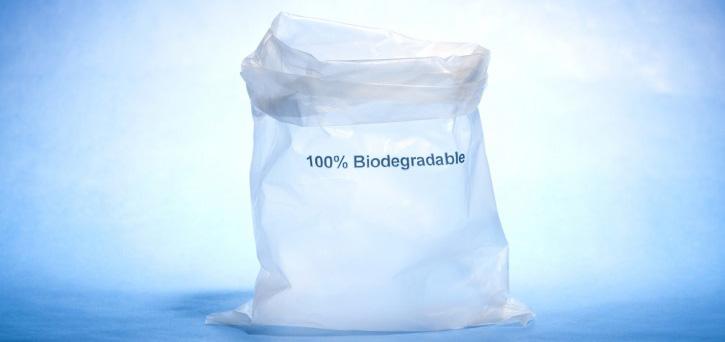
Benefits of Biodegradable Plastic Bags

Biodegradable items tend to break down into natural materials by the microorganisms without harming the environment. The examples of biodegradable items are food scraps, wood, cotton, human and animal waste.

Can plastic be biodegradable? Well, it sounds strange if this term is associated with something “eco-unfriendly” like plastic.

To your surprise, it is true. Plastic bags can be biodegradable. Biodegradable plastics are made of specialized enzymatic or chemicals that break down the material once exposed to sun and air. Standard plastic is made with chemical fillers that can be a threat to environment when they are released when the plastic is burnt.

Biodegradable plastic bags

U.S. Environmental Agency has alarmed that only 8% of the 31 million tons of plastic is recycled each year. The rest part goes to landfills and waterways, creating litter and threat to the wildlife.

In this scenario, biodegradable plastic bags can be a savior to the environment. Here’s how…

1. Less Carbon Emission:

Traditional plastic releases four tons of emissions while biodegradable plastics only emit nearly .8 tons of carbon. This way, they ensure the minimal amount of carbon emissions into the air in the process of manufacturing.

Also Read: Going Green is Not Easy: Top Green Packaging Challenges

2. Waste Reduction

Traditional plastics make up the 13 percent of the waste. As we have told you that only 9 percent go for recycling, while the rest enters water bodies and landfills. The good thing with biodegradable plastics is that it breaks down over the course of time, depending on its exposure to sunlight, soil and air. Although not all biodegradable plastic will completely break down, any reduction will create space and minimize the pressures on the waste fills. Therefore, biodegradable plastics may eliminate the need to add more landfills, saving lands for other purposes.

3. Recyclable:

Given that they take a lot less time to decompose than traditional plastics, they are easy to recycle, that’s too without releasing toxic elements. Another advantage of biodegradable plastic bags! They are moldable as traditional plastics and can be turned into various appealing ways to suit your requirements.

4. Source Reduction:

Biodegradable plastics also minimize the use of petroleum supplies. Nearly 2.7 percent of country’s petroleum is consumed by the manufacturing of traditional plastics. Their oil molecules are heated and treated so that they convert into polymers.

Biodegradable plastics, on the other hand, are manufactured using corn, orange peels, starch, plants and switchgrass. Their manufacturing requires less energy and generally not involves the burning of fossil fuels. The corn based plastics require 60 percent less energy than generating a similar polymer from raw petroleum. Many bags are also made from organic materials or paper.

More biodegradable plastics can be manufactured with less energy which also lowers the amount of pollution.

5. Non-Toxic:

It can’t be denied that traditional plastics are made using harmful by-products and chemicals which are a threat to environment and life as well. They are likely to emit these harmful substances during the breakdown process. But this is not a case with biodegradable plastic.

They are safe and don’t release toxins during their breakdown process. They are absorbed by the soil. Such benefits of biodegradable plastics are welcoming, as the toxic plastic heap on the planet is on the rise and this ever increasing rate will pose health problems for both human and wildlife.

Bottom Line:

So these are the benefits of using biodegradable plastic bags. They are safe for the environment and their use should be encouraged. However, the need of plastic usage awareness and education regarding their repurposing is necessary as the wise use can make a difference.


The best diy ideas to reuse the empty plastic bottles

DIY is the next big thing!

It is eco-friendly, challenging, and it is awesome. Drawing imaginative lines on the cloud is so possible today (speaking metaphorically), all you have to do gather the empty unused items around your home and build a castle out of it. Today we are not talking about castles, but the most common by product of soft drinks and its availability in abundance. Plastic bottles can be shaped into numerous things and if you let the horses set free who know you end up making a sports car out of it. Till the time you come up with an idea and execution plans for building a sports car, let us go through something easy and can be done in a matter of minutes:

1. Plastic Bottle Supply Cups:

Be the man who takes the different road and thinks of the environment. DIY does not means cheap but can be as classy as you want. Pickup the bottle cut the neck or 1/4th of its height and put an iron over it to get soft edges. Stitch chain zipper on the edges and make a superb supply cup of desired size.
2. Coffee Creamer Containers:

Coffees are the life saver when you are in stress or need more time to work at night, but you can make the containers containing coffees to help you out. You can reuse plastic coffee creamer bottles and make it a snack storage container. It will make the pouring easy, and would allow you to take all types of food for the road trip. It can also be used to store salt and sugars.
3. DIY Plastic Bottle Planter:

“The pot with a cat face”. Oh yes, you can make it, and it is just a simple paint work which can be done at home it-self with not much use of tools.
1. Cut out the bottom like one third of a 2-liter bottle.
2. Apply paint on the bottle with white or the color of your choice.
3. Use the remaining parts of the rest of the bottle to cut out ears.
4. Start drawing a face and other features on the bottle.
5. Fill in the bottle with desired seeds, manure and soil.
Turn any 2 litre plastic bottle into something which everyone will adore.

4. Laundry Detergent Bottles into a Watering Can:
Why to pay for the watering cans? Make sure you have kept the empty laundry detergent containers in the backyard. Simply drill or punch some holes in the cap and there you go with a brand new watering can. You have the full liberty to remove the stickers on the bottle to avoid your neighbours thinking you pouring detergent on the plants.

5. Herb Garden with an Empty 2-Liter Bottle:
This project can make you the CAPTAIN PLANET, as nothing more herbal and greener can be done with the empty bottles. You can satisfy you eco soul as well the environment with this initiative. In any way the project where the empty bottles are been used for the irrigation of small plants, this calls for the cheers to herbal army. Follow the steps to do to erect a herbal garden from a recycled bottle:
1. Let us remove the label from the bottle and clean it from inside.
2. Then take a sharp knife like object and poke or puncture drainage holes on the top third of the bottles.
3. Poke or punch a hole on the side of the bottles, near about half-way down.
4. Now wrap a piece of paper around it.
5. Now take a marker and trace the cutting line around it.
6. Now let us cut along the bottle on the line.
7. Flip over the bottle top and then insert a strip of fabric.
8. You will have to make sure the fabric stays in contact with the soil.
Which one is your favourite? Let us know in the comment section below!

7 Types of Plastics and Which One You Should Use

Although go green movements are on the rise worldwide, plastics are still a packaging necessity for food products. The reason is pretty simple—they are inexpensive, easy to handle and easily available. The same benefits made them customer’s favorite. According to one study, an average American family uses nearly 1,500 plastic grocery bags in a year, meaning that 102 billion plastics bags are used in a year. Most plastics are thrown after a single use; and 0.6 percent of them are recyclable. Rest of them is transferred to landfills and oceans. It takes 1,000 years to decompose plastic bags. While plastics can’t be simply eliminated from the daily lives, they can be used wisely. All you need to determine which plastic is safe for what product. Here we have helped you by listing the commonly used plastic categories along code.

Polyethylene Terephthalate (PETE or PET) (Code: 1)

Polyethylene Terephthalate


Polyethylene terephthalate (PETE or PET) is a lightweight plastic known for its impact resistant properties. It is considered safe and easy to recycle. PETE is used in food packaging for beverages, oil, water, salad dressing and jam/jelly.


High Density Polyethylene (HDPE) (Code: 2)

High Density Polyethylene


Being a low-hazard plastic, HDPE is used for milk, grocery bags, cereal box liners, water and juice packaging. It is also used as a packaging for cleaning supplies and shampoo. Like most plastic, it is likely to release estrogenic chemicals. It can be recycled.


Polyvinyl Chloride or PVC (Code: 3)

Polyvinyl Chloride


Polyvinyl chloride or PVC is used in making packaging for food wrap, bottles, oil, and OTC drugs. As it contains chlorine as its key ingredient, it is biologically and chemically resistant. However, it is not safe for cooking or heating. This plastic is generally not accepted by recycling programs.


Low-Density Polyethylene or LDPE (Code: 4):

Low-Density Polyethylene


Low density polyethylene or LDPE is great for making grocery bags, food wraps, squeezable bottles and bread bags. It is thinner than some other resins and provide strong resistant against heat.

This plastic is generally considered safe. However, it is not recyclable, thereby posing an environmental issue. It should be reused or repurposed rather than throwing them away after one use.


Also Read: Highlights of Low-Density Polyethylene

PP or Polypropylene (Code: 5)

Polypropylene


Polypropylene or PP is used to make food packaging like yogurt cups, medicine packaging and ketchup bottles. It is microwave safe as it is heat resistant. It can be made translucent, opaque or a various color during manufacturing. Polypropylene is now accepted by most curbside recycling programs.


Polystyrene or Styrofoam (Code: 6)

Polystyrene


Polystyrene is used in food packaging like egg cartons, disposable cups, bowls, take out eatery containers and plastic cutlery. It is not safe as it leaches potentially toxic chemicals when exposed to heat. This plastic type is difficult to recycle. Top of that, it may take hundreds of years to decompose when not recycled. The optimal solution is that it should be reused and repurposed.


Also Read : Are polystyrene and thermocol same?

Other or O (Code 7):

plastic resin


This category indicates that packaging is made of a plastic resin other than the six types of resins mentioned above. For example, the packaging can be made with polycarbonate or the bioplastic polyactide (PLA). Or it can be made with more than one plastic material.


Conclusion:

The key is here to choose the plastics with little to no hazards. To conclude, plastics belonging from the categories 2, 4, and 5 are safe. As a retailer or business, use compatible plastic category for your food product to ensure safety and integrity of food packed within. Customers, on the other hand, should try to reuse the plastics that can’t be recycled.


Amazing eco-friendly packaging tips to make a better tomorrow

From consumers to producers, nowadays everyone seems to be environment-conscious. This has lead to increase in demand of eco-friendly packaging. Learn here some tips to integrate sustainable packages for your business.

5 amazing eco-friendly packaging tips to make a better tomorrow
Image Credit : Google


Usually companies aim at fetching consumers’ attention with those fancy packaging and flashy logos. Though these ideas work well, yet there is another element which has overtaken the forefront of packaging. Yes, you guessed it right. It is about eco friendly packaging.

Also Read: Going Green is Not Easy: Top Green Packaging Challenges


The significance of environment friendly packaging extends past getting consumer attention. It truly makes a real impact on the environment.

Do you know on an average American throws away approximately 185 pounds of plastic per year? And about 42% of all plastics ever produced, have been used in packaging. So you can imagine the amount of waste generated.

Businesses need to understand the importance of sustainability in product packaging. Streamlining your company’s packaging division with eco-friendly practices will help reducing environmental footprint and boost your brand’s loyalty. Here are listed some tips to get started:

 1) Reduce the weight of packaging

Of course, it is not possible to reduce the weight of the product. Here it means using less plastic to create packaging so that it results in less material to be recycled or going to waste. You can switch to options like a thinner plastic water bottle. Plus, it will help reducing overall transportation and fuel costs, which in turn will benefit environment. Similarly, you can ask your packaging manufacturer to create custom packaging boxes to preserve space and materials. Employing minimalist packaging technique offers a sleek, clean, and aesthetic appeal.

 2) Choose recyclable and biodegradable material

There are some materials such as paperboard, cardboard, and plastic, which can be reconstituted to create new items. And then there are biodegradable stuffs which you can choose to save environment. Here are few examples:

  • Corn starch: It falls into the category of biodegradable item and is perfect for all types of food packaging. Made out of corn starch, these have limited or no negative impact on the environment.
  • Cardboard and paper: You can count them in biodegradable, recyclable, and reusable category, altogether. Being lightweight and strong, these are perfect to pack products ranging from medicines to cosmetics.
  • Biodegradable plastic: The best alternative to plastic is here. Actually, when exposed to sunlight, it decomposes well. So it is a viable and practical alternative.
  • Bubble wrap: Made out of recycled polyethylene, these are fully degradable. With product safety these also ensure safe environment.

 3) Try post-consumer recycled material

This packaging material can be recycled by the consumers when they have finished with the product contents. You can clearly mark the packaging as recyclable. Plus, you can provide information about how to best recycle the container. It improves consumer awareness and brand loyalty.

 4) Go for natural packaging

Another good alternative is natural packaging. It decomposes faster and is compostable. Over the past few years, companies have recognized that there are some materials which are healthy for the environment and attract audience. An example is coconut husks.

 5) Use innovative and unique materials

There are some businesses who cannot avoid pictures or texts on their packages. For this purpose, they make use of inks made from chemicals that can cause harm to the environment. Why not move to ink made from milk proteins or food instead? For instance, you can use soy inks.

The world of eco friendly packaging is not complex at all. With the guidance of an expert packaging solutions team, you can identify acceptable and functional packaging structure.

Need some help? We will be more than happy to assist you.

Going Green is Not Easy: Top 5 Green Packaging Challenges

Today’s consumers are more aware of environmental issues, thereby focusing on the eco-friendly products like green packaging. Industries embrace green packaging as it lowers the carbon footprint and gives them an opportunity to be termed as “eco-friendly business.

Besides, it helps them boost the sale due to customer’s preference to ecofriendly products.

This way, green packaging is meaningful for both consumer and a business.

However, the issues and challenges associated with green packaging can’t be sidelined. Here’s why…

Being Mixed with Non-Recyclable Materials:

Green packaging is not completely green. Its ingredient list also includes packaging materials like plastics, paper, metals and glass. Most of them like plastic are not biodegradable. Their benefits and pitfalls are determined by the application and the storage of the products.

Being Expensive:

Cost factor is another challenge associated with green packaging. From segregation of “ideal” materials from the waste, complicated manufacturing to keeping up with the packaging laws, the process requires times, energy and investment. However, there are certain ways to lower the cost of the manufacturing of green packaging. Manufacturers should look for the contents in the packaging that can be easily recycled or can be generated from post-consumer waste.

Varying Laws:

U.S. packaging laws regulate the production, use and disposal of packaging. However, the packaging laws vary from state to state based on the standards like environmentally acceptable packaging, basic requirement for recycling and limit of using certain materials. Therefore, one state’s packaging law may not be valid in another. On the top of that, there is no comprehensive federal legislation or uniform packaging laws for all the states. So it does make sense to abide by the rules of the state where packaging is being manufactured and distributed.

Misleading:

The term “green packaging” or “green recycling” logo can be misleading in some cases. In fact, many customers are not aware if the packaging of their product is entirely green. Sadly, some manufacturers try to capitalize on consumer ignorance by compromising with the “green level” of their packaging. For example, they don’tprovide information on the label regarding the time and conditions associated withdegradability.

Limitations:

Hot stamps and laminations reduce the recyclable ability of the packaging. For example, metallic hot stamps contain metal content, thereby they can’t be recyclable. Similarly, lamination coatings are not dissolvable. Many recycling centers are not able to perform proper material testing due to limited time and resources.

So these are the key challenges associated with the green packaging. These concerns should be addressed so that more and more industries can be able to use green packaging. Though these challenges are bigger, they can be eliminated with the visionary approach; exploring new recyclable materials; making regulations packaging friendly; and raising consumer awareness for an informed purchase.