

Table of Contents
- Why Evidence Packaging Determines Case Outcomes
- Types of Police Evidence Bags
- Key Features to Check Before You Order
- Best Practices for Collecting, Sealing, and Storing Evidence
- Equipping Your Department or Firm
- FAQs
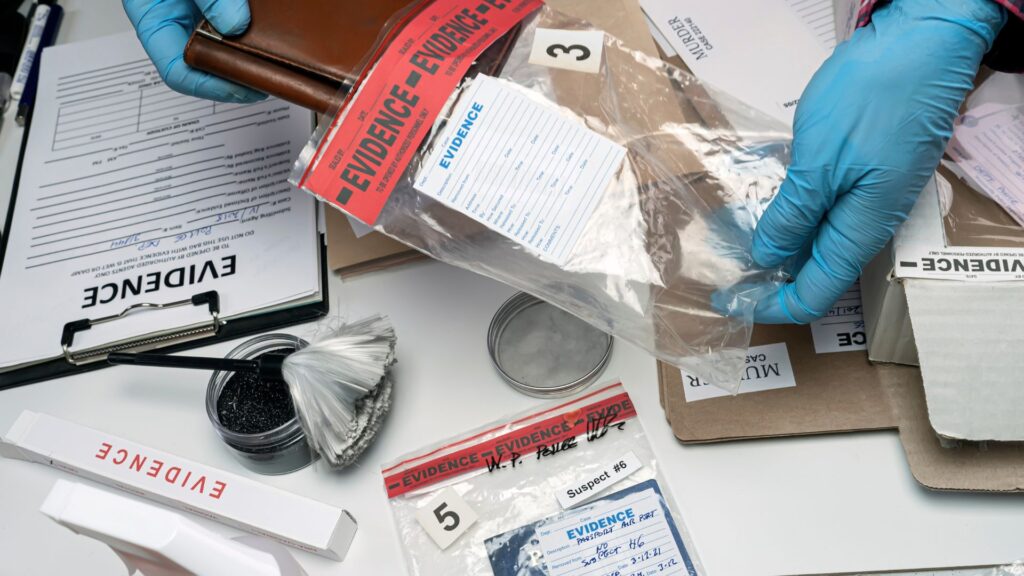
A mishandled evidence bag can unravel a case before it ever reaches trial. A torn seal, a cross-contaminated sample, or a missing chain-of-custody entry gives the defense an opening no department wants to hand them. The right police evidence bags close that gap. They protect biological material, digital devices, weapons, and cash from contamination, tampering, and environmental damage from the moment an officer collects an item to the day it’s presented in court. This guide covers the available evidence bag types, the features to check before you order, and the handling practices that keep evidence admissible. Browse our full line of police evidence bags to see stock and custom options for every collection scenario.
Why Evidence Packaging Determines Case Outcomes
Courts weigh not just what was found, but how it was collected, packaged, and stored. Evidence bags do three jobs at once: they prevent contamination between the scene and the lab, they carry the chain-of-custody documentation that proves who handled an item and when, and they shield contents from moisture, light, dust, and pressure that can degrade or destroy what’s inside. Skip any one of those, and a case built on solid police work can still fall apart on a technicality. The Federal Rules of Evidence set the legal bar; the packaging is what gets an item there intact.
Types of Police Evidence Bags
Different evidence calls for different bags. Matching the material to the item is the first best practice on this list, not the last.
Tamper Evident Bags
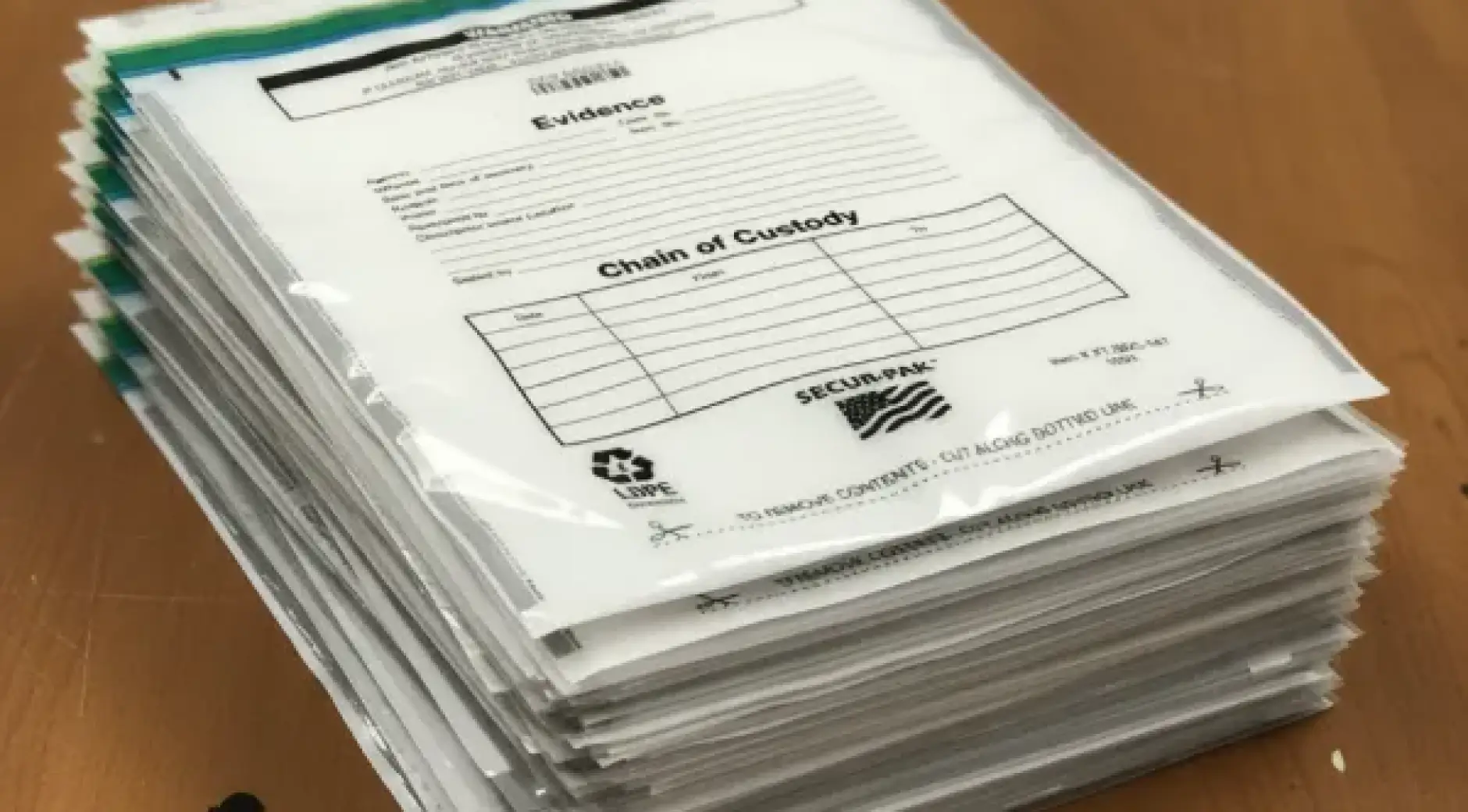
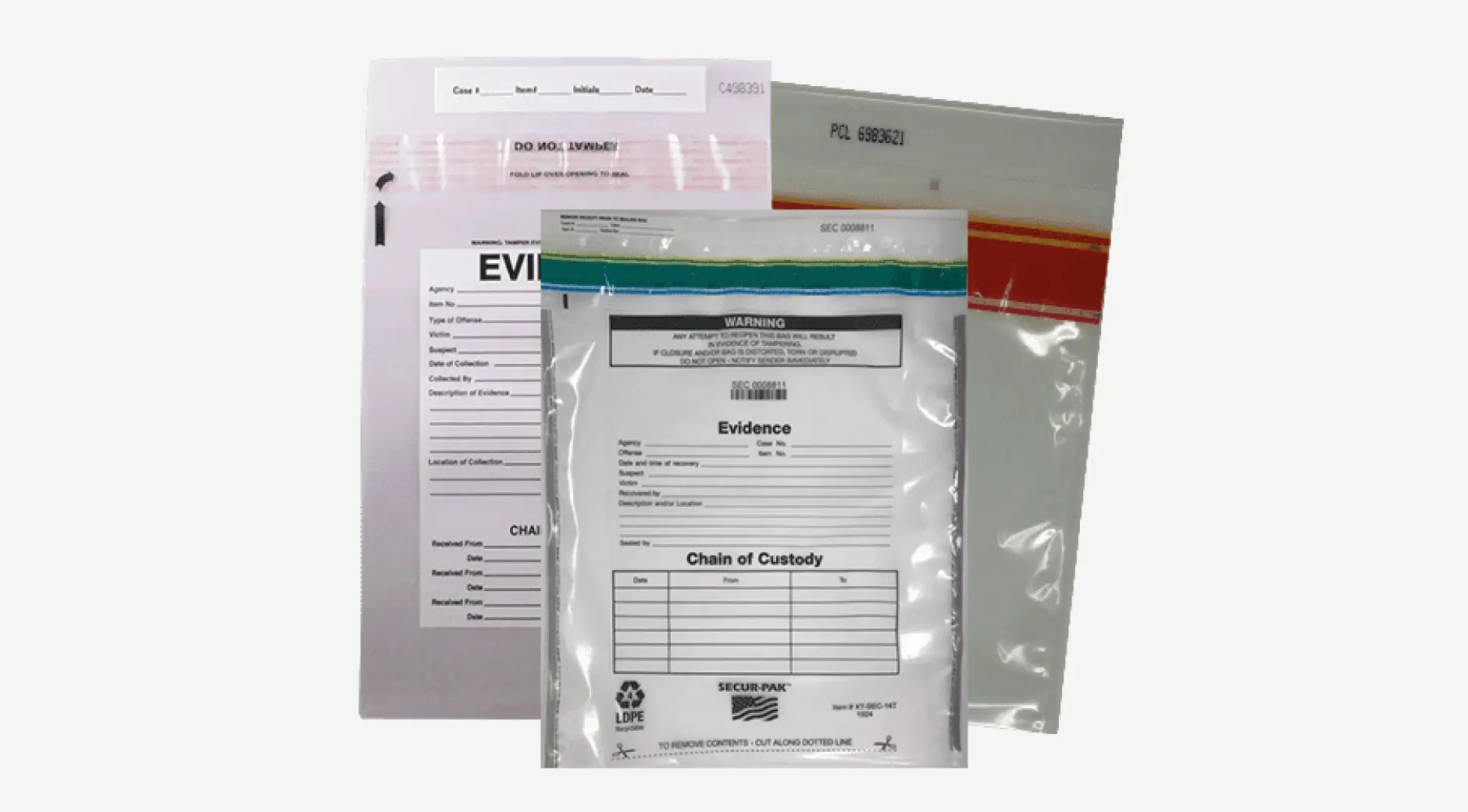
Built for anything that needs to prove no one opened it after collection: cash, documents, phones, and digital storage devices. Each bag uses void tape or an adhesive seal that leaves a visible mark the moment someone tries to get in, plus serialized numbers, tear-off receipts, and barcode tracking so the chain of custody holds up under cross-examination. iSell Packaging’s tamper-evident security bags ship with writable information blocks for case numbers and collection details. Departments handling cash evidence or bank deposits can pair them with our clear deposit bags for see-through verification during counts.
Forensic Evidence Bags
Made from breathable paper that prevents the moisture buildup that degrades DNA. Suited to clothing with bodily fluids, hair samples, fibers, tissue, soil, and fire debris, where trapping humidity does more damage than exposing the item to air.
Plastic Evidence Bags
Transparent and durable, protecting contents from dirt, rain, and chemical exposure without hiding what’s inside from the collecting officer or the lab tech logging it in. Appropriate for weapons cleared as safe to bag, tools, drug paraphernalia, and containers holding powders or liquids.
Specialized Crime Scene Evidence Bags
Some evidence needs more than a general-purpose bag. Reinforced gun evidence bags protect firearms during transport, foil-lined bags contain arson and fire debris without losing accelerant residue, and narcotics bags are built to prevent leakage. For sharp objects, officers need genuinely tamper proof bags, not just a bag with a fold-over top, since a compromised seal on a weapon or blade is a safety issue as much as an evidentiary one.
Paper Evidence Bags
Breathable and cost-effective, allowing airflow that limits bacterial growth. The standard choice for biological samples, clothing, shoes, and other porous materials, which plastic would trap moisture against.
Vacuum-Sealed Evidence Bags
Remove air and moisture entirely, which makes them the right call for trace evidence and anything headed for long-term storage rather than same-week lab processing.
Key Features to Check Before You Order
A bag that looks secure on the shelf can still fail in the field. Verify these before it becomes standard issue:
- Durable materials. Cardboard, reinforced paper, or hard plastic that can survive transport from the scene to the evidence room without tearing or crushing its contents.
- Clear labeling areas. Enough writable space for the case number, collection date and time, the collecting officer’s name and badge number, the recovery location, and a description of the item.
- Tamper-evident seals. Tape-based or adhesive closures that show a clear, unmistakable sign of interference.
- Tracking features. Barcodes or serial numbers that tie a physical bag to its digital chain-of-custody record.
Best Practices for Collecting, Sealing, and Storing Evidence
- Wear gloves and change them between items. Skin cells and fingerprints from one piece of evidence can contaminate the next.
- Dry items before sealing. Avoid plastic for wet materials, since trapped moisture promotes mold and can destroy biological evidence.
- Match the bag to the evidence: paper for biological materials, plastic for non-porous objects, specialty bags for weapons or chemicals.
- Label the bag immediately after sealing, with every required field filled in before it leaves the officer’s hands.
- Confirm the tamper seal is fully closed and functional before the bag moves to storage or transport.
- Store each item in its own bag. Combining items risks cross-contamination and complicates the chain of custody.
- Keep chain-of-custody documentation current at every handoff: who collected it, who transported it, who opened it, who examined it, and where it’s stored now. The Office of Justice Programs has additional guidance on preservation standards, and recent reporting on forensic integrity underscores why these steps matter well beyond the initial collection.
Equipping Your Department or Firm
Procurement and evidence-room staff are usually balancing two things: bags that hold up to legal scrutiny and a budget that has to stretch across an entire caseload. Private investigation and forensic firms have the same problem from a smaller angle, needing the same evidentiary integrity without a municipal supply contract behind them. iSell Packaging works with both, supplying law enforcement packaging solutions sized from single-case orders to standing departmental stock, with custom printing and serialization available for agencies that need it.
Request our evidence bag sample kit to test seal strength, labeling space, and material durability against your department’s own protocols before you order in volume.
Ready to standardize your evidence packaging? Get a quote now, and iSell Packaging will help you spec the right mix of tamper-evident, paper, plastic, and specialty bags for your caseload.
Frequently Asked Questions
What size evidence bag should I use for different types of evidence
Size depends on the item, not a fixed standard. Small tamper-evident bags fit phones, cash, and jewelry. Mid-size bags cover clothing items and larger tools. For bulky items like firearms or bolt cutters, reinforced or oversized bags keep the object fully enclosed rather than folded, which can compromise both the seal and the item. When in doubt, size up. A bag that’s too small forces folding or overstuffing, both of which weaken the tamper-evident seal.
How long should evidence stay in its original bag before storage or disposal?
That’s set by department policy and the applicable statute of limitations for the case type, not by the packaging itself. Evidence bags are built for long-term integrity, so the bag isn’t the limiting factor. What matters is that the chain-of-custody record stays attached to the bag for as long as retention policy requires, including through any transfer to long-term storage.
Are evidence bags reusable?
No. Tamper-evident and forensic evidence bags are single-use by design. Reusing a bag means reusing a seal that’s already been broken, which defeats the purpose of tamper-evidence and creates an opening for a defense attorney to question the chain of custody. Each new item gets a new bag.
Do evidence bags need to meet biohazard or bloodborne pathogen standards?
Any bag holding items with blood, bodily fluids, or other biological material should carry biohazard labeling and meet handling standards for bloodborne pathogens, separate from its evidentiary seal. iSell Packaging offers biohazard-labeled options for forensic and paper evidence bags used with biological samples. Confirm with your department’s safety officer which categories require it.


